
Stay up to date with the latest developments
Leave your email address and receive the latest developments in software, AI and Mendix.
Leave your email address and receive the latest developments in software, AI and Mendix.
What will users expect from software in the future? Discover what makes an application future-proof and which choices made today make the difference.
Developing software has become more accessible than ever. Thanks to low-code and AI, organisations can build applications and realise new ideas faster. That is a welcome development, but at the same time expectations are rising.
Users no longer compare a business application only with other business software. Without realising it, they compare it with the apps they use every day. Everything has to work fast, feel intuitive and be available the moment you need it.
The question is therefore not only whether an application is good enough today, but also whether it will still fit the way people want to work in five years' time. How do you make sure software stays user-friendly, flexible and future-proof when both technology and user expectations change?
When does software actually feel modern? According to our developers the answer is surprisingly simple: when you do not have to think about it.
Good software helps you do your work without the technology taking centre stage. Users do not want to be busy with how an application works; above all they want to reach what they need quickly.
A modern application feels obvious to use. As soon as users have to search, wait or take detours, software quickly starts to feel dated.
The way people use software is changing constantly.
Where an admin portal used to be perfectly fine to use on a desktop only, users now expect to be able to carry out the same work on their phone while on the move.
Ease of use is also playing an ever bigger role. Employees have grown used to simple interfaces and fast interactions. They bring that expectation to the software they work with every day.
This means organisations increasingly have to think about how their applications grow along with changing needs.
Although AI is currently mainly used to develop software faster, we expect AI to increasingly become part of the applications themselves.
Not as a conspicuous chatbot popping up everywhere, but as smart support during the work itself.
Think of features that automatically improve texts without changing the content, make suggestions while data is being entered, or help users find the right information faster. If you want to get started with this, you can often begin small by integrating AI into existing software.
AI is therefore moving more and more into the background. Not because it is becoming less important, but because it is becoming a natural part of the user experience.
When an organisation has a new web application developed, the focus is often on today's requirements. Yet looking ahead is at least as important.
Software that is easy to extend, that is built according to clear development agreements and that is not unnecessarily dependent on specific technologies or suppliers stays valuable for far longer. That is exactly why it is wise to think about dependence on licences and platform choices as well.
A future-proof application does not have to predict which technology will matter in five years' time. What matters far more is that the foundation leaves room to change. Think of software that can be extended with new functionality, can connect to other systems and stays manageable when processes change.
A clear architecture, maintainability, documentation, security and avoiding unnecessary dependencies all play an important part in this.
Not sure whether your current application is technically and organisationally ready for the future? With our Application Audit & Improvement Analysis we map out quality, maintainability, security, documentation and continuity, among other things.
The work of software developers is changing fast too.
AI is taking over more and more repetitive tasks. As a result, the developer's role is shifting further towards analysing, designing, reviewing and working closely with the business.
The question is less and less whether software can be built. The challenge lies more often in making the right choices, guarding quality and developing solutions that keep working in the long term.
That is precisely where the added value of experienced developers remains considerable.
Software does not only have to work well today. It also has to be ready for tomorrow's changes.
By paying attention to quality, manageability and flexibility from the start, you get an application that not only fits current processes, but can also grow with new requirements, technologies and developments.
Because in the end, modern software is not the application with the most features, but the application that helps users do their work more simply, more smartly and more efficiently.
 Want to know more?Ask Armando
AI-assisted development speeds up traditional application development, but the bigger shift is the room it creates to te...
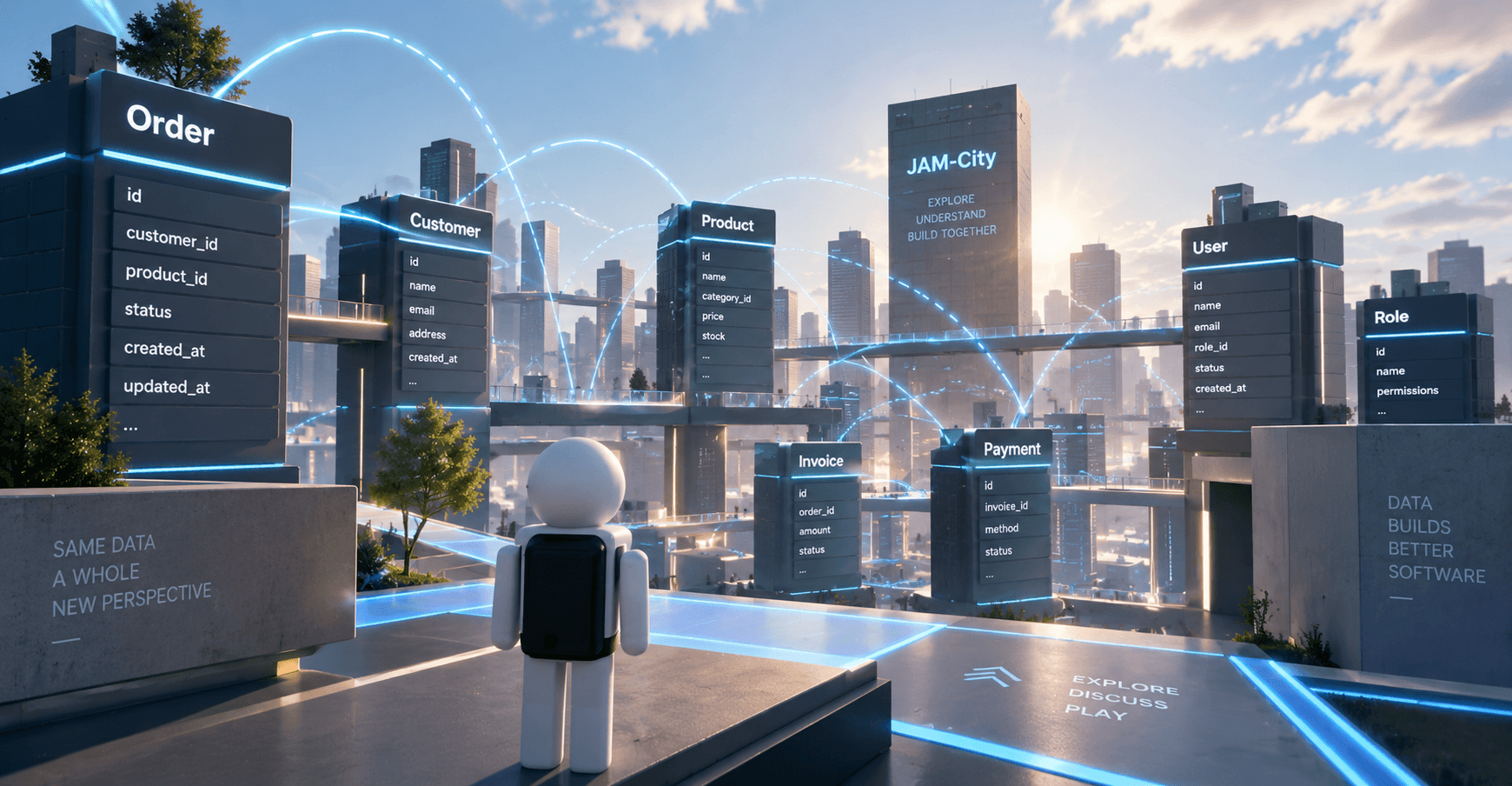
It started as a way to view a database in 3D. It now has a name, JAM-City, and we can walk through it with colleagues, d...
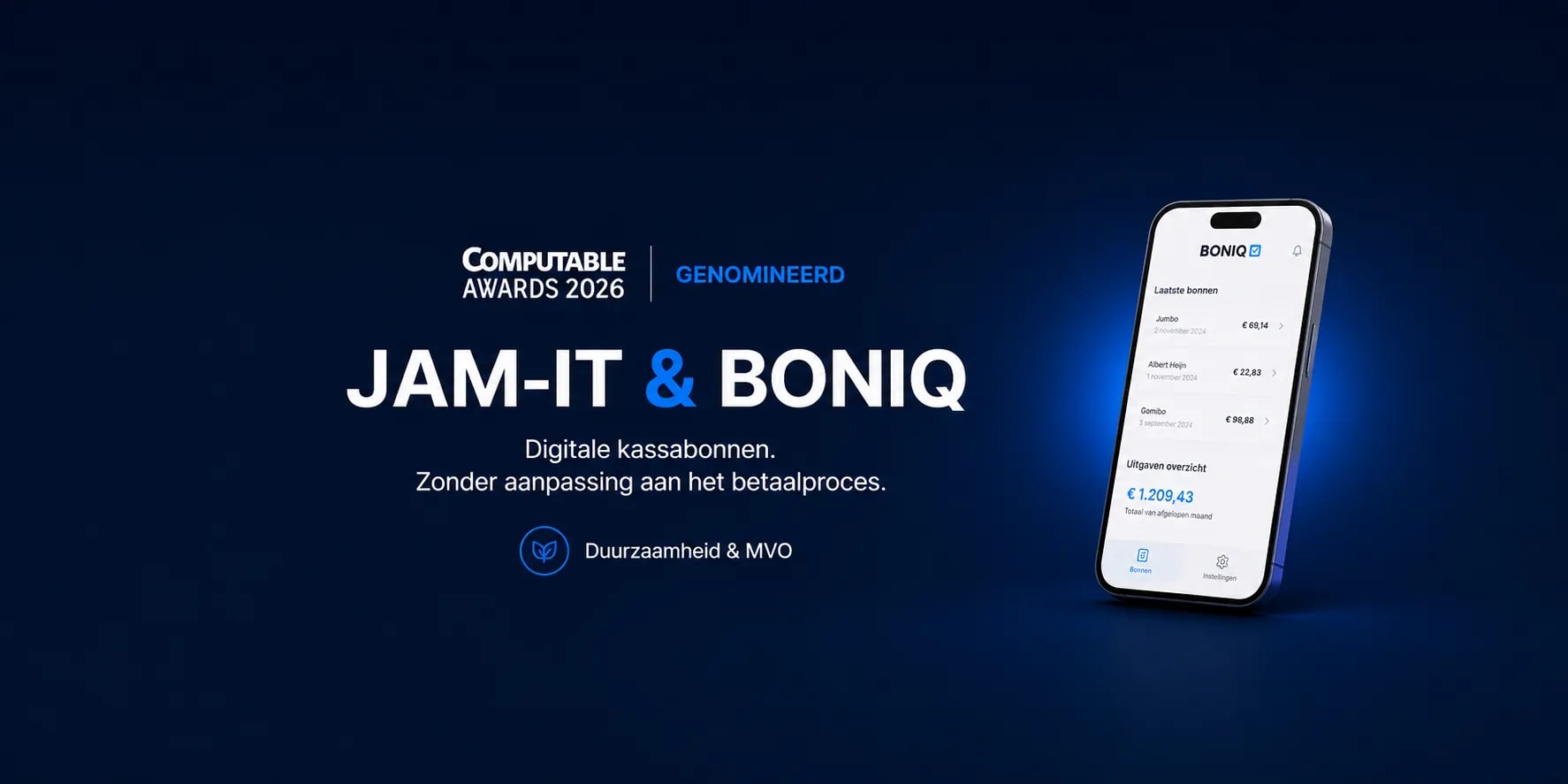
For the third year running, JAM-IT has been nominated for a Computable Award. This time together with BONIQ, for a proje...