
Technology
How do you know for sure who you are doing business with? Smart verification inside business software
A transport company signing up, a prospective tenant or a user who has to confirm their identity first. With verification built into your own business software, you know whether the details are right, without switching between systems.
Not every user calls for the same check
When someone registers with a company or a digital platform, you don't always just want to know who that person is. Sometimes you also need to check whether a company actually exists, whether someone is authorised to carry out certain work, or how creditworthy a prospective customer is.
A customer placing a transport order doesn't need to go through the same verification as a transport company that gets access to other people's vehicles. So it isn't about running as many checks as possible, but about having the right information available at the right moment.
Common checks you can build into your software
- KYC
Who is this person?
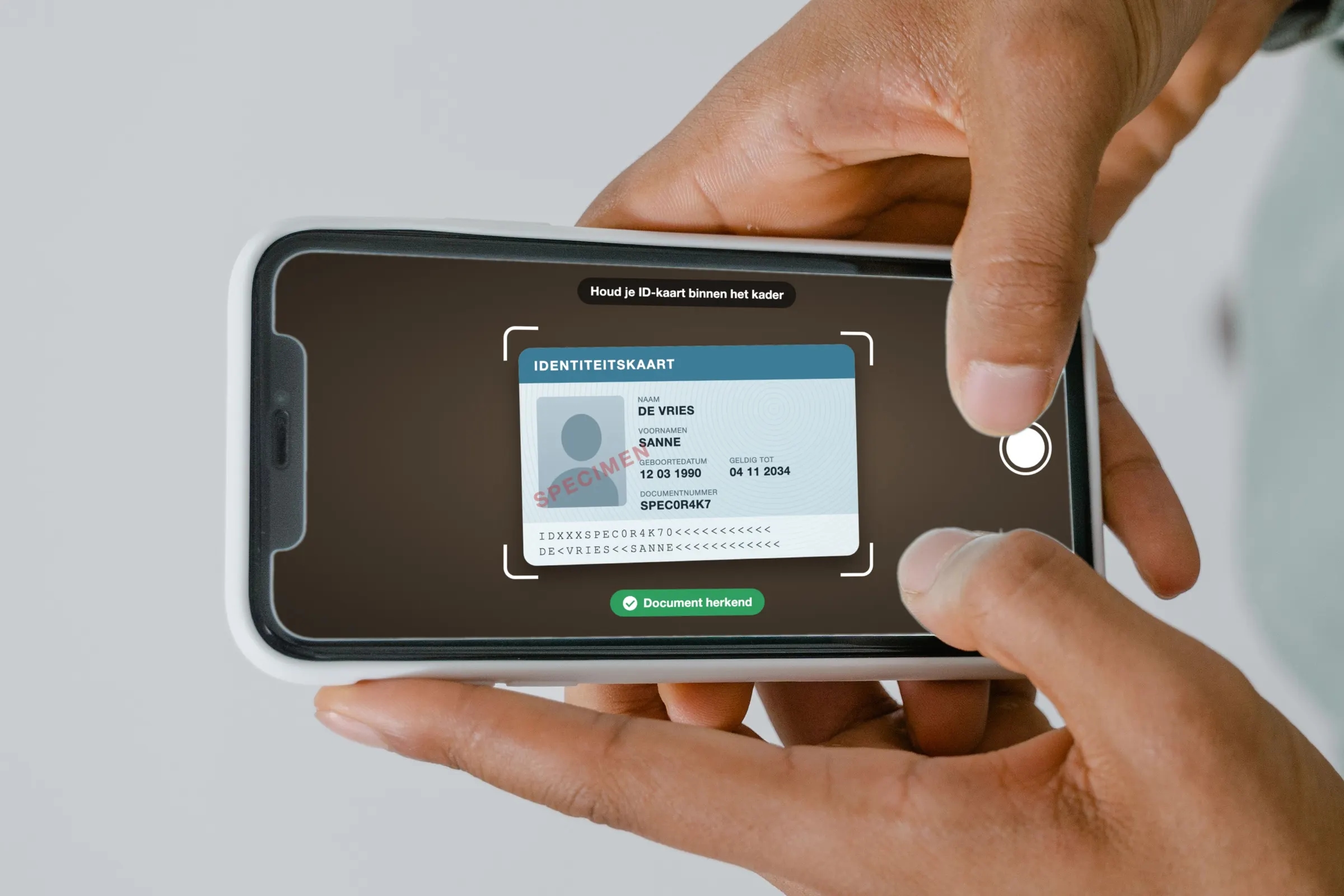
Know Your Customer establishes someone's identity, for example by checking an identity document and running a face match. For drivers, that can be done specifically with a driving licence.
- KYB
Does this company really exist?
Know Your Business checks company names, registration numbers and submitted documents against official registers, such as the Dutch Chamber of Commerce. Shareholders and UBOs can be included too.
- Financial
Is this customer creditworthy?
A credit score for a prospective tenant or customer, requested from within your own application. Or a bank account verification, which checks whether an account belongs to the stated account holder.
In practice: verifying transport companies before they get access
For a client in the transport and logistics sector, JAM-IT is working on an integration that verifies transport companies and drivers. Transport companies sign up on the platform to carry out orders and move customers' vehicles, so not every registered party should simply get access.
The solution uses Didit, an external provider of identity and business verification. The integration has now been partly tested and is being completed and tailored to the client's wishes; the full functionality is not live yet.

In practice
How verification works on our client's platform
Only after a successful verification can administrators give the registration their final approval. Until then, the transport company has no access to the rest of the platform's functionality.
Registering
The transport company creates an account on the platform.
Invitation
An email invites the company to the business verification. Details and documents are compared with the relevant registers.
Review
The status comes back from Didit automatically. Administrators see what has been approved, rejected or still needs a manual review.
Access
Once the verification has succeeded, an administrator approves the registration and the company gets access.
A check that fits the role
Every user group gets a check that matches its own role on the platform, without everyone needlessly going through the same verification process.
Transport companies
Go through a business verification before they get access to orders and customers' vehicles.
Drivers
Get a separate verification, in which they identify themselves specifically with a driving licence.
Customers
Who place a transport order don't need to go through the same verification process.
You can check creditworthiness from your own application too
For a client in the construction and real estate sector, JAM-IT built an integration with EDR Credit Services. When an interested party goes forward as a prospective tenant, a member of staff starts the creditworthiness check from within the existing application.
The application sends the required details to EDR and receives a score, which is stored and visible to the member of staff. That score doesn't automatically decide whether someone is accepted or rejected. It is additional information for the assessment. Another application is bank account verification, which we are currently working on for an application that is still in development.

The technology already exists. The added value is in the integration.
Assessing identity documents, consulting business registers or analysing creditworthiness calls for specialised technology and reliable data sources. You don't have to develop that yourself. For many checks there are external services that can be connected to existing software through APIs. You start a check from the application, and the outcome comes back automatically.
But a technical integration on its own isn't enough. Especially when personal and financial data is being processed, privacy, security and careful data management need attention.

Four questions to answer up front
That's why at JAM-IT we look beyond the integration itself. Our starting point is always the same. The check takes place within the process where the information is needed.
When is a check needed?
On the transport platform when access is granted, in the real estate application when a prospective tenant is assessed.
Who is allowed to start a check?
The user themselves, through an email invitation, or a member of staff from within the application.
What happens when a check fails?
No access to the platform, or a manual review by an administrator.
Which information may staff see?
Only what they need for their assessment, such as the verification status or the credit score.
Which checks could make your business processes smarter?
Do staff still check identity documents, company details or financial information by hand? Or do they gather information in several external systems, which then has to be entered into your own application again? That can often be done smarter. JAM-IT connects existing systems and external services in custom software. Not by rebuilding everything, but by making smart use of the technology that is already there.
Discuss your verification questionCurious what we could do for you?
 Want to know more?Ask Armando
Read more

Why we built our own business software: this is Jammers
Privacy, GDPR, contracts, leave, time tracking, invoicing: as an organisation grows, so does everything you need to arra...

The evolution of our traineeship: from Mendix to Mendix and AI
When we started our IT traineeship at JAM-IT, the starting point was clear: give people with the right analytical skills...

The tipping point from low-code to AI
How the way we develop is changing, and what that means for the choices you make today Over the past few years, low-code...