
Stay up to date with the latest developments
Leave your email address and receive the latest developments in software, AI and Mendix.
Leave your email address and receive the latest developments in software, AI and Mendix.

Privacy, GDPR, contracts, leave, time tracking, invoicing: as an organisation grows, so does everything you need to arrange properly around your people.
Off-the-shelf software exists for many of those processes. But at JAM-IT we gradually reached a different conclusion. We build bespoke software for our clients every day. So why would we adapt our own way of working to various off-the-shelf packages, when we can also build software that fits exactly how we work? That is the story of Jammers.
What once began as a fairly simple internal application has since grown into an important part of how we run the business. Over the past period Martijn has substantially renewed and extended the application.
The name may need some explanation. At JAM-IT we call our employees Jammers. And it is exactly for them that the application was originally built.
At first it mainly held employee details and CVs. Gradually, more practical matters were added: contract details, for example, but also commuting information and data needed for our administration. Reminders followed after that. When does a contract expire? When is someone's birthday? Which action needs to happen, and when? That is how Jammers kept growing alongside our organisation.
For a long time Jammers was a good internal application for trainees to gain experience on. New functionality around employment contracts, for instance, made for a good, concrete development assignment. But slowly the role of the application changed.
When we achieved our ISO certification, we started looking even more critically at how we record information and how our processes are set up. Jammers increasingly came into view there.
Because as soon as you process personal data, contracts and other sensitive information, it is no longer only about ease of use. You also want to know who can view which information, how data is processed and how long you are allowed to keep it.
A practical example of that is the GDPR. Not all personal data may or must be kept for the same length of time. Some data has to be retained for a certain period after someone leaves, while for other data the need to keep it lapses sooner. In Jammers we can now make those retention periods part of the process, so data is automatically deleted at the right moment.
Our accountant can also get controlled access to the information needed for, for example, payroll processing. That means sensitive documents and personal data no longer have to be emailed back and forth.
Jammers was therefore becoming less of a handy internal tool and more of a central place where we can organise our business operations professionally.
That development has picked up considerably over the past period. We added leave registration, for instance. Employees get their own view of their leave balance, and we can properly record the processes around it. That is not just practical: as an employer you also have responsibilities around leave, such as informing employees in time when leave hours are about to expire.
Employment contracts can now also be managed and signed from within Jammers, and we record information about annual review conversations there.
The application is also moving closer to our day-to-day operations. Project budgets are visible, time tracking is becoming part of Jammers, and invoices can be generated based on it.
For an organisation like JAM-IT that is an important step. Ultimately, a large part of our day-to-day business consists of people working on projects for clients. Hours, project budgets, invoicing and HR administration are therefore closely connected. Bringing those processes together in one place creates more and more overview.
That is a fair question. Plenty of systems exist for HR, leave registration, time tracking and other parts of running a business. You usually pay per user for those, and you get a package with a predetermined way of working.
That can work perfectly well for many organisations. But it is actually exactly the question clients come to us with too. Do you adapt your process to the software? Or do you build software that fits your process? For Jammers we deliberately chose the second option.
We can record exactly what is relevant for our organisation and connect different processes to each other. If our way of working changes, we can adapt the application. If regulations change, we have one place where we can process that change. And because we develop the software ourselves, we also have our own control over how it keeps developing.
Technically, too, Jammers has gone through quite a development. The original application ran on Mendix. When it became clear that the licensing situation was going to change, that was a logical moment for us to take another look at the technical foundation.
We had already built part of the new functionality, including leave registration, in a traditional way. In the end we decided to rebuild the whole of Jammers that way. We use AI-assisted development to build faster. AI helps us build, but the decisions about architecture, quality, security and how it works stay with our developers.
That gives us the freedom to keep developing Jammers at a high pace, based on what we actually need internally.
That may ultimately be the most interesting thing about Jammers: every day we tell our clients that bespoke software can be valuable when off-the-shelf software does not fit the way an organisation works. With Jammers we apply exactly that idea to ourselves.
Not because every organisation should build its own HR software. Off-the-shelf software is often a perfectly good choice. But when different processes, rules and systems become more and more intertwined, bespoke work can become worth considering. You no longer have to organise your way of working around the limitations of the software. The software supports the way of working that makes sense for your organisation.
Jammers once started by recording a few pieces of data about our employees. By now it supports us with privacy and GDPR, HR administration, leave, hours, projects and invoicing. And we obviously do not yet know what new processes or regulations the coming years will bring.
But we now have one place where we can add it. Exactly like what we build for our clients: software that does not dictate how you have to work, but grows along with how your organisation works.
 Want to know more?Ask Armando
Anyone who knows JAM-IT knows that we believe strongly in structure, quality and ownership. Not as buzzwords, but as a f...
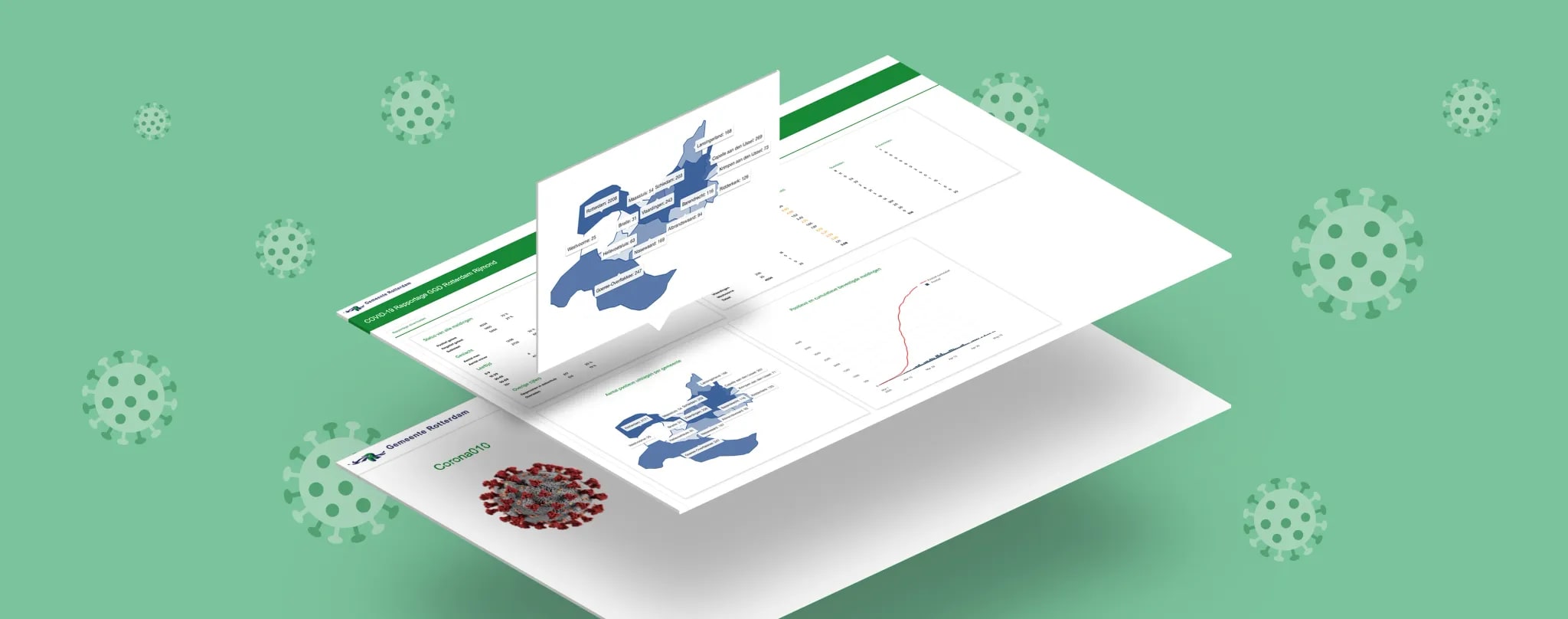
GGD Rotterdam-Rijnmond has an important job in curbing the spread of the coronavirus. They register and follow patients,...
Working efficiently and accurately are important cornerstones for you as a financial adviser. We understand that complet...