
Stay up to date with the latest developments
Leave your email address and receive the latest developments in software, AI and Mendix.
Leave your email address and receive the latest developments in software, AI and Mendix.

With the low-code platform Mendix you can easily build apps that work well, even if you do not have much programming experience. Complex code is replaced by a visual builder in which you assemble your apps from standard building blocks. That lets you develop apps at speed, without giving up quality.
In the Mendix visual builder you use standard elements to put together an app that meets your needs, and quickly. Without writing a single line of code, if you want (no-code). That makes this way of developing extremely accessible, which is welcome given the current shortage of good developers. But you will notice that sometimes you want to add something that deviates from the standard. A specific map function, an unusual screen layout, or a piece of functionality unique to your business, for example. That is when you run into limits fairly quickly. The solution?
You can extend the standard Mendix elements with custom widgets. You develop these widgets using HTML, CSS and JavaScript, so they do require some programming knowledge. They make the options for your app endless. Colour, shape, position, functionality: whatever you can program in those languages (and that is almost everything) can be turned into a widget. You can then use the widget alongside the standard Mendix components. Want to use the widget in several apps? You can. You can even share it through the Mendix Marketplace if you like. All the while you keep the benefits of low-code. The base still consists of standard elements, and the custom widgets add maximum flexibility on top.
In the past you built custom widgets for Mendix within the Dojo framework. That framework had a steep learning curve, and you could only put what you learned to use inside Mendix. Not ideal. Fortunately that has changed, and you can now build your custom widgets with React JS or React Native. React is a popular JavaScript library: a collection of elements you can use and adapt as you see fit. React and Mendix complement each other well, which makes them even more powerful together. React is a fairly small library and therefore easy to learn. On top of that, React is a valuable addition to your skillset as a developer, even if you do not work with Mendix.
The standard elements can be adjusted only to a limited extent. As a result, nothing much can go wrong. Usually that is a big advantage, but sometimes it is a limitation too. Because what if you do have specific wishes or requirements for your app? With custom widgets the options become endless.
Do you have some experience building apps in Mendix by now, but want more? Then we have good news for you. In our five-day course 'Building custom widgets for Mendix' you learn everything you need to get started with custom widgets. Even if you have no experience with HTML, CSS and JavaScript yet. We take you through the process step by step and teach you everything you need along the way. By the end of the training you will be able to build simple but powerful widgets and implement them in your app.
 Want to know more?Ask Armando
For a long time low-code played a supporting role in software development. The larger, more complex applications were bu...
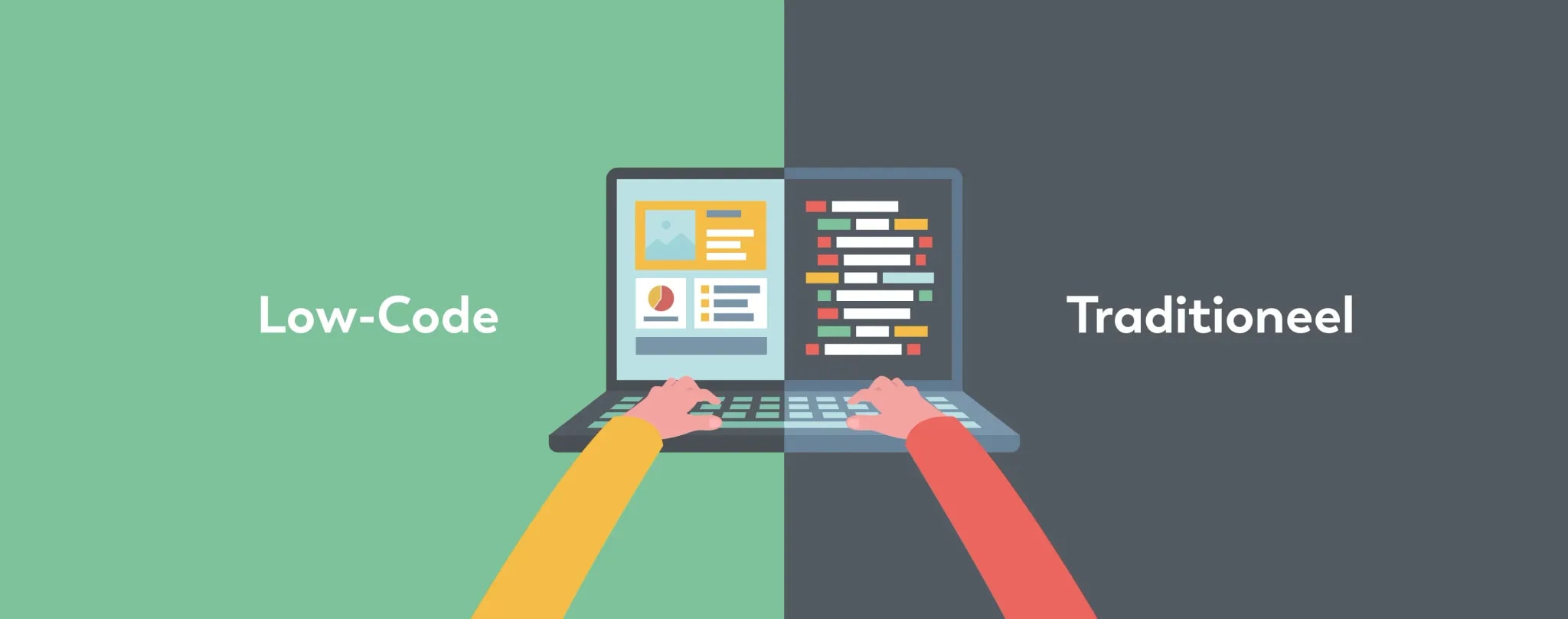
Which technology do you choose for your application: low-code or traditional? At JAM-IT we work with both techniques and...

In today's world, every company needs more and more software. Think of applications that improve processes, and applicat...