
Stay up to date with the latest developments
Leave your email address and receive the latest developments in software, AI and Mendix.
Leave your email address and receive the latest developments in software, AI and Mendix.

JamOps makes it possible to work DevOps-style with Mendix, by automating a large part of checking and committing your code.
Do you want to get started with DevOps in your organisation? Then you want to make new functionality available to the end user as quickly as possible, without that speed coming at the expense of the quality, security and correct working of your application. JamOps makes it possible to work DevOps-style with Mendix, by automating a large part of checking the committed code.
JamOps makes Continuous Integration and Delivery possible. Continuous Integration is a process in which new pieces of code are automatically tested and integrated into the latest version of the application. If a test fails, the code has to be corrected before it is integrated. That removes many manual actions and prevents conflicts and bugs. Continuous Delivery then makes sure changes are automatically pushed to the desired environment after testing. Thanks to these processes, end users can start using new functionality as quickly as possible.

JamOps supports the highest standards of quality and security, which makes it ideal for organisations that want to achieve or maintain ISO certifications such as ISO 27001 and ISO 9001. ISO certifications require the way of working to be documented precisely and every change to be traceable. JamOps offers the structure and transparency needed to meet these requirements, and to enforce them as well, even when developers are not aware of the agreements. That way a company can guarantee its staff work according to the agreed method.
When a developer commits their work and we spot something, we alert them straight away. That happens while the developer is still in the context of the work. This active approach makes it possible to review and resolve small changes quickly without extra time investment.
JamOps goes beyond tools and reports. It makes a clear statement: there is a way of working that leaves room for negotiation but no room for exceptions. In a world where countless quality tools scan software weekly and generate reports, we see that this is not always effective. Reports often end up on a pile without anyone actively working on quality. With JamOps we have a different philosophy. Our analyses are immediate, active and focused on results.
With JamOps' UnusedWidgets Auto-Resolve feature, managing unused widgets in your Mendix applications is easier than ever. This feature automatically detects widgets that are not used in your application and removes them without manual intervention. After a commit, JamOps checks your application for unused widgets and handles their removal.
The process is simple: navigate to your widgets directory, copy and paste the relevant script (depending on your operating system: Unix/Mac or Windows) into your terminal or command prompt, and run it. JamOps makes sure only the unnecessary files are removed, keeping your application clean and tidy. That not only saves time, it also prevents possible performance issues caused by redundant code.
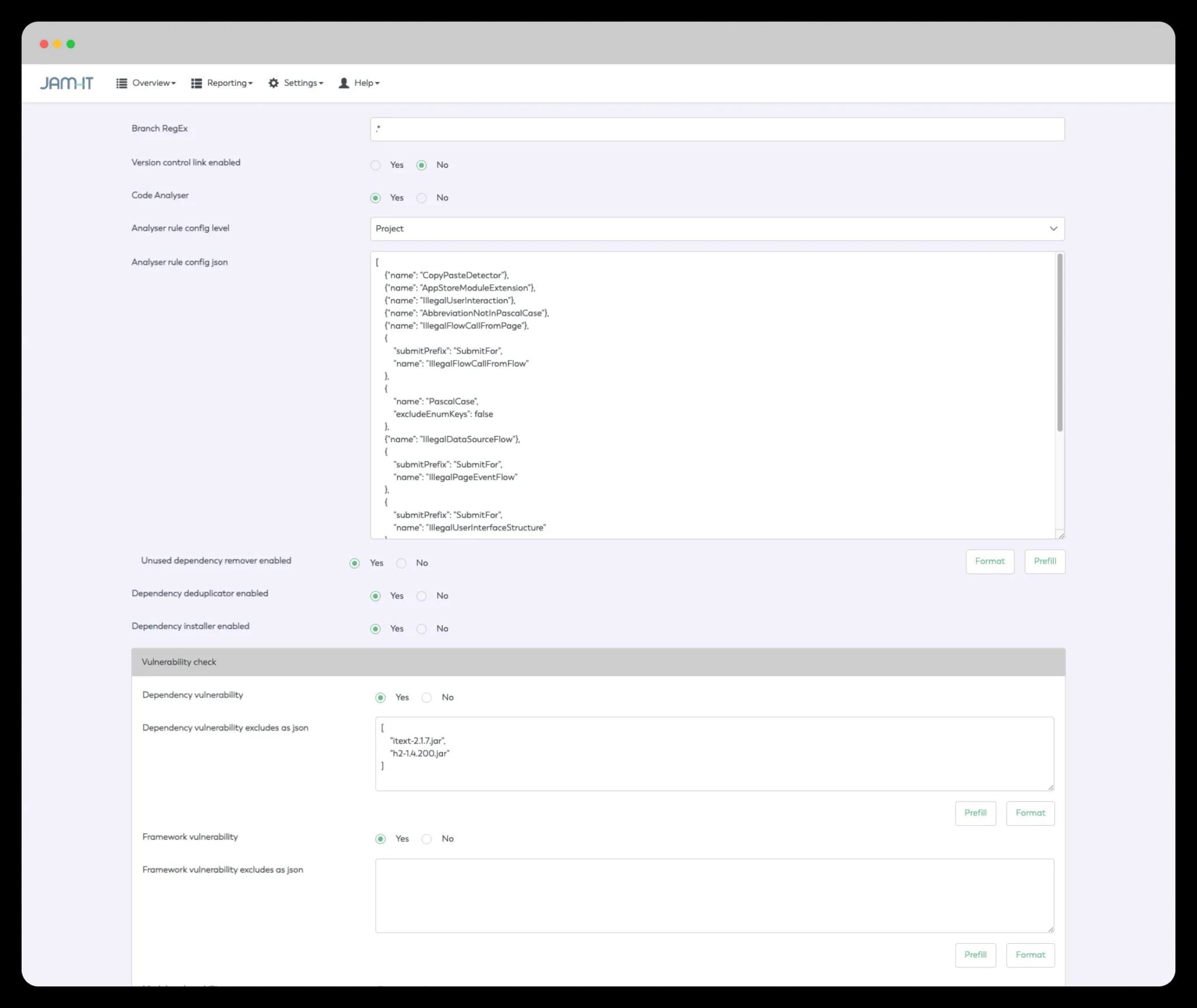
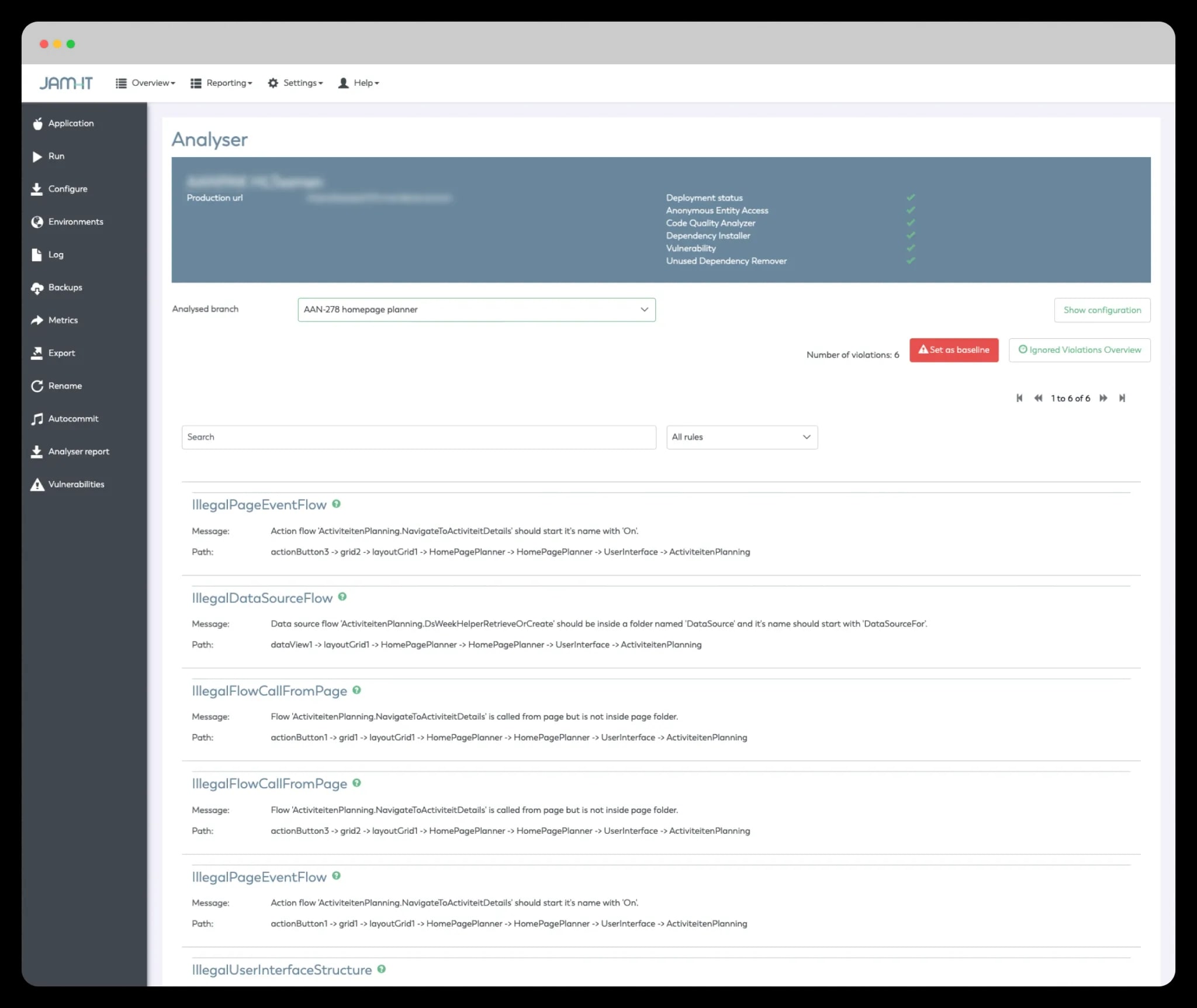
An important part of JamOps is the static code analyser, which checks for common programming errors. Think of unused variables, empty catch blocks and careless copy/paste. In the analyser, errors like these have been turned into rules the code has to comply with. After a commit you see within a minute which rules have not been met, so you can fix it straight away. For each project you can decide which rules you want checked. Perhaps you do not use PascalCase, for instance, but a different naming convention. Then you can switch PascalCase off and switch another naming convention on. Some rules can be configured yourself, so they match your way of working.
When a developer commits their work and we spot something, we alert them straight away. That happens while the developer is still in the context of the work. This active approach makes it possible to review and resolve small changes quickly without extra time investment.
To make sure every new piece of code is secure, JamOps runs a number of automatic tests. It does that on three levels:
Are you trying to commit something that is not secure? Then you get a notification straight away, so you can fix it.
To prevent bugs it is wise to use unit tests. A unit test is a test that checks whether the outcome of your code is what you expected. Does the outcome of the test not match what you expected? Then something is probably wrong in your code. That way you can fix errors in time. You develop unit tests in Mendix and JamOps runs them automatically. That keeps your application free of bugs.
The strength of our philosophy lies in the fact that there is a consequence. We believe that making quality fixes optional does not work. If something is not addressed, changes stay out of the test environment and the deployment is blocked until the violations have been resolved. In this we stick to our zero tolerance policy. That approach may sound strict, but in practice it turns out to be perfectly workable. This is the essence of the JamOps philosophy, and it is also a fundamental aspect of the DevOps approach.
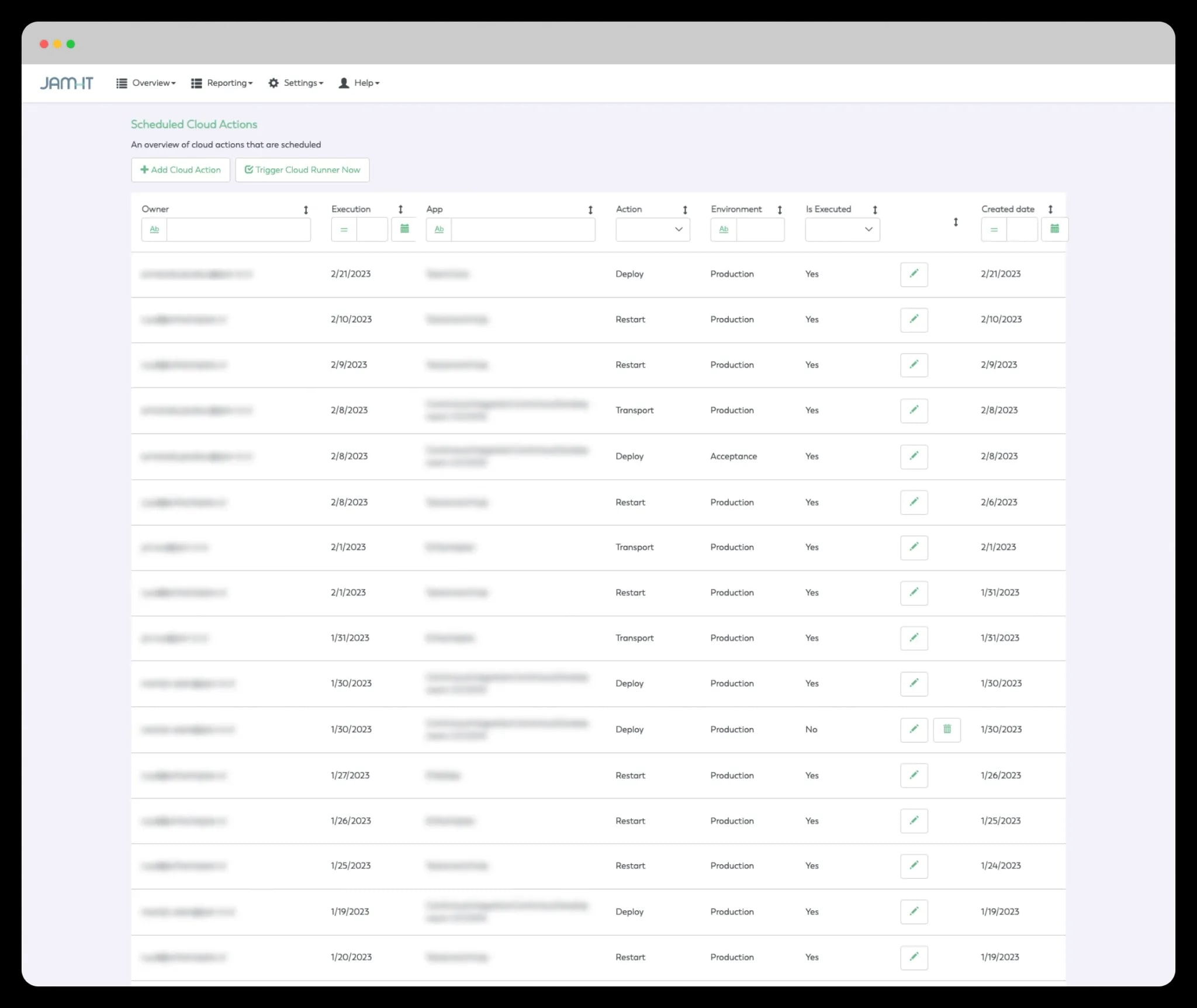
If you have to deploy a lot of applications, it often takes a long time, because you cannot do them at the same time. With JamOps you can schedule your deployments in the right order and have them run automatically, using Cloud Actions.
From now on JamOps offers more extensive feedback with Cloud Actions. Users receive immediate notifications, complete with logs, indicating whether the actions completed successfully or not. That means you no longer have to keep checking whether Cloud Actions have run. As soon as you schedule an action, you are guaranteed a notification, so you can rely on clear, timely feedback. These notifications can also be received through other channels such as Slack or custom communication methods, depending on the user's specific preferences.
When an object (containing data) is saved, Mendix checks whether there is related data that has not been saved. Mendix then saves it automatically anyway, to guarantee that Mendix works correctly. When the user logs out, however, it can happen that Mendix deletes the automatically saved data from the database again. If that is not what you wanted, you have lost production data without noticing. Do you use JamOps? Then developers get a notification the moment this happens and the CI/CD pipeline is put on hold. That way they can see how the problem arose and solve it. The pipeline can then be resumed.
When your application is running, warning messages (about memory issues, for example) can disrupt your development process. It is hard to work out the cause and the urgency of these messages. With FreezeFrames, the latest addition to JamOps, JAM-IT offers a solution to this problem.
Analysis with precision When you get an alert, you receive a guide for in-depth analysis, in which a snapshot is taken of what was happening in your app at that moment. That gives you a detailed picture of what was going on at the time of the message. It offers insights that are crucial for understanding the context behind these warnings.
Struggling to start your analysis? FreezeFrame is the solution you need to act faster, more efficiently and more accurately on potential incidents. Many developers often do not know where to start their analysis. Identifying the right starting point can be a challenge. That is why FreezeFrame offers the support needed to make this process easier. Get in touch with us without obligation for more information.
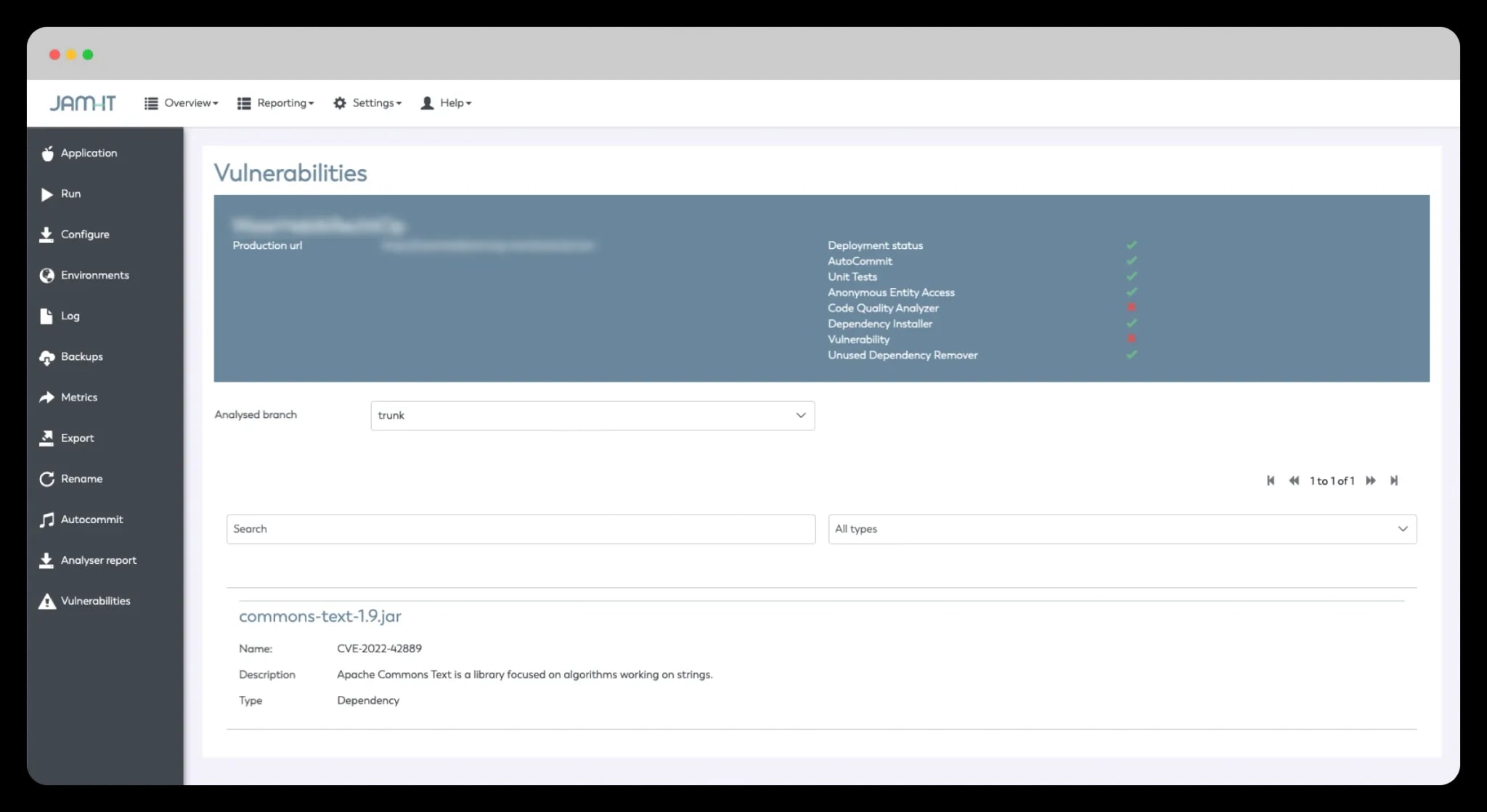
Within a project there are always certain Java components that depend on each other (dependencies). To prevent conflicts it is important that you always have the latest version of every dependent Java component. That can be a complicated and labour-intensive process, because all those dependencies in turn depend on other components. That is why we added the Dependency Check to JamOps. It makes sure the latest version of every Java component is in place and clears out old and duplicate versions.
Discover the new Java Code Quality Analyzer within JamOps: a new feature that helps improve the code quality of Mendix Java Actions. This advanced feature, developed specifically for the Mendix development process, gives developers thorough control over their Java code within Mendix Java Actions.
The analysis within the Java Code Quality Analyzer is carried out using advanced technologies that examine the code thoroughly on various aspects of quality and reliability. That allows developers to identify and address possible improvements. The Java Code Quality Analyzer uses a set of strict rules to scan the code for compliance with best practices and conventions. With more than 300 rules, such as identifying unused variables and detecting possible programming errors, this analyzer offers an extensive set of checks to safeguard the quality of the code.
This marks an important step in our drive to improve the DevOps development process. With the Java Code Quality Analyzer, developers can keep a close check on the quality of their Java code within Mendix Java Actions, all within the familiar environment of JamOps. Try it now and experience the improved options for safeguarding the quality of Java code within JamOps.
Curious about how JamOps came about? You can read about it in our blog.
Developers are often busy and working on several projects at once. It can then be hard to keep checking whether your code is secure and of good quality. Tools to automate this have been around for a while. Those tools analyse the source code regularly (every night, for example) and then send a report with errors. But these tools have a number of major drawbacks:
JamOps prevents this. The biggest advantage of JamOps is the fast feedback. You commit your changes and JamOps flags it immediately if something goes wrong. That way the developer can solve the issues while still in the context of the task. Until the issues have been resolved, the pipeline does not continue and the deploy does not happen. That prevents users from experiencing problems with the application.
That makes the work a good deal more efficient. Because development is done the right way from the start, the project stays clean and consistent. So there are no problems to fix afterwards and everyone can easily pick up each other's project.



The cost of JamOps depends on a number of factors. On the number of apps you manage, for example, and the amount of customisation needed. Curious what the cost would be in your case? We are happy to map out your situation so we can sketch out the figures. Almost always you will have earned JamOps back within a short time, because you work more efficiently and spend less time solving problems.
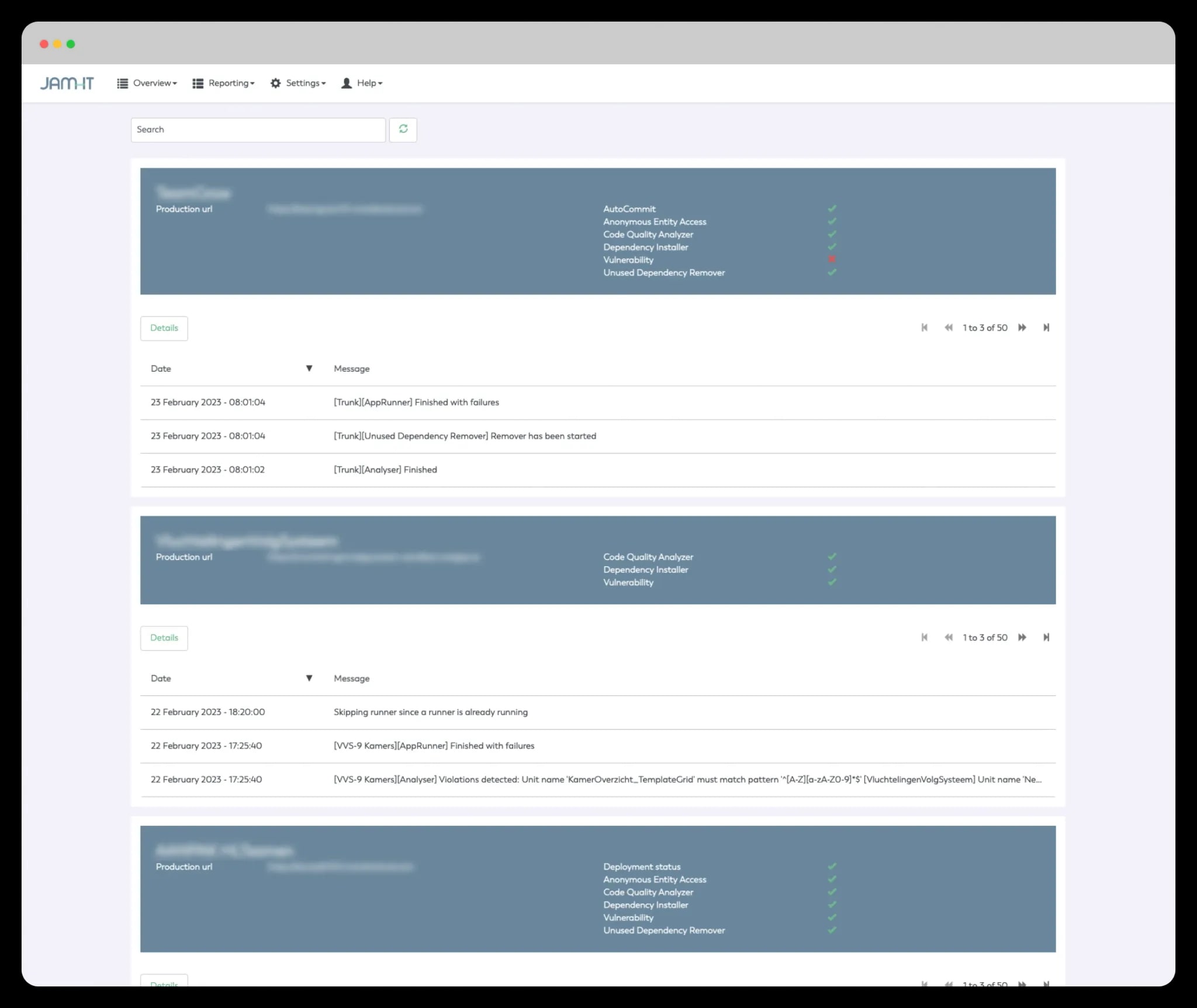
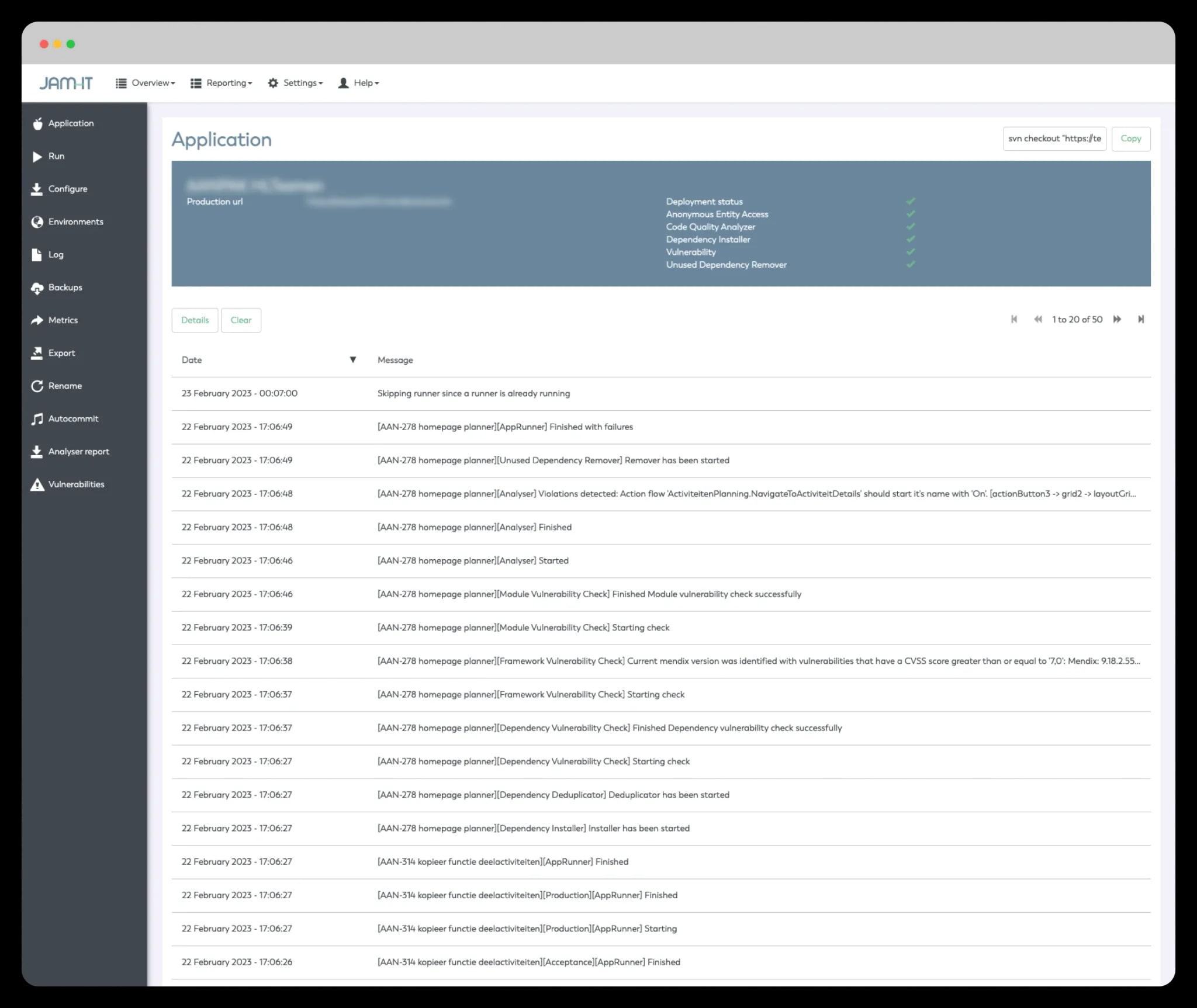
Curious about JamOps? Have a look at a taster below.
 Want to know more?Ask Armando
Municipalities face a complex challenge around the reception of refugees. You want real-time insight into available rece...

Are you generating documents in Mendix and running into limitations?
We like things easy. We developed JamConvertor to simplify and speed up work processes.