
Stay up to date with the latest developments
Leave your email address and receive the latest developments in software, AI and Mendix.
Leave your email address and receive the latest developments in software, AI and Mendix.
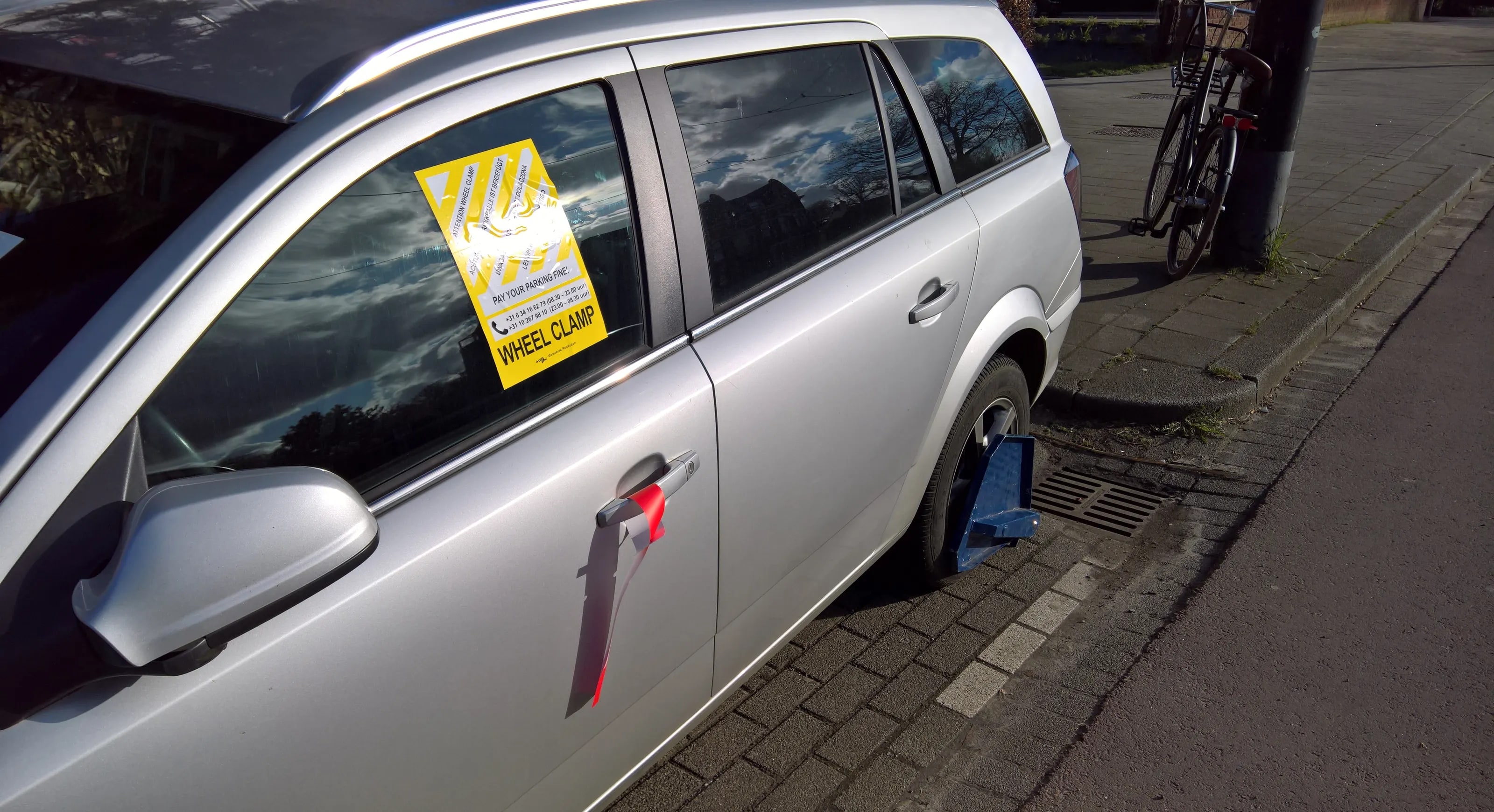
Photograph: Donald Trung, via Wikimedia Commons, CC BY-SA 4.0
Previously, Rotterdam's enforcement officers had to work with various lists, emails and systems to gather and share information. The municipality needed a system that brought everything together in one place, so everyone could work with it in real time.
They asked JAM-IT to develop an application for this.
This application is the first of its kind: a mobile native app built with the Mendix platform. JAM-IT worked intensively with Mendix to create the app. That worked so well that JAM-IT decided to develop three more mobile native apps using Mendix.
Developing the mobile native app took only a week. The hybrid app for Klemmi already existed, and was fully rebuilt into a native mobile version.
For an organisation as vast as a municipality, any way of reducing manual actions is a huge improvement. The app saves time when fitting a wheel clamp, towing and unclamping the vehicle.
In Rotterdam you sometimes see it driving past: the scan car. This car tracks down defaulters, foreign vehicles with three or more outstanding fines. As soon as one is found, a municipal enforcement officer has to go out to fit a wheel clamp. To speed this process up, JAM-IT developed a mobile native app.
To track down defaulters in Rotterdam, a scan car drives through the city scanning every vehicle it comes across. The registration plates are then compared with a list of defaulters held by the tax authority. When a defaulter is found, an enforcement officer has to be alerted and sent to the vehicle.
That officer fits a wheel clamp to the vehicle and takes photos from every side to prove no damage occurred during clamping. The only way to have the wheel clamp removed is for the defaulter to pay the outstanding amount.
If no payment is made, the vehicle has to be towed away after five days. Here too the officer takes photos from every side to prove no damage occurred. The whole process takes a lot of time and a great many actions from the officers.
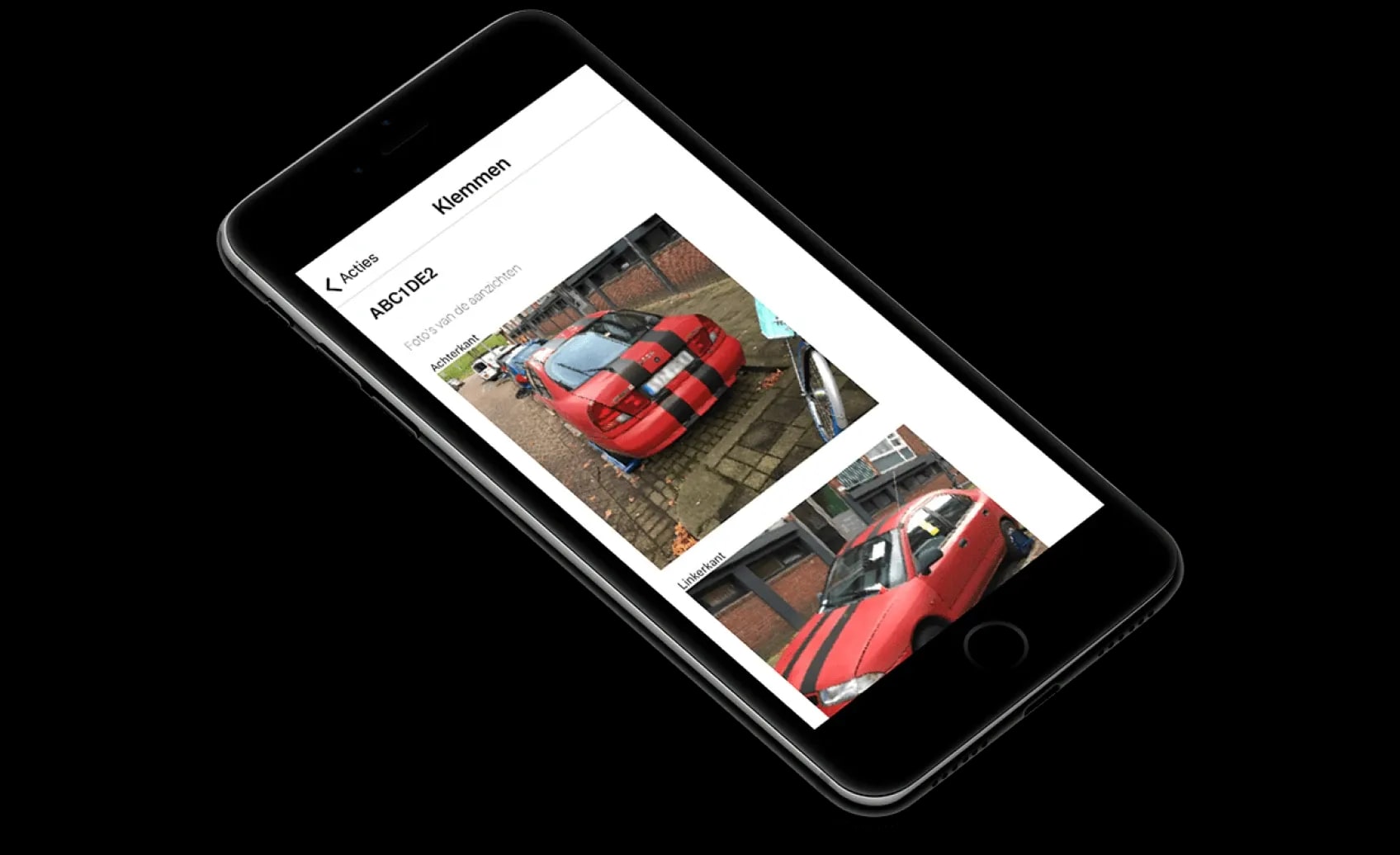
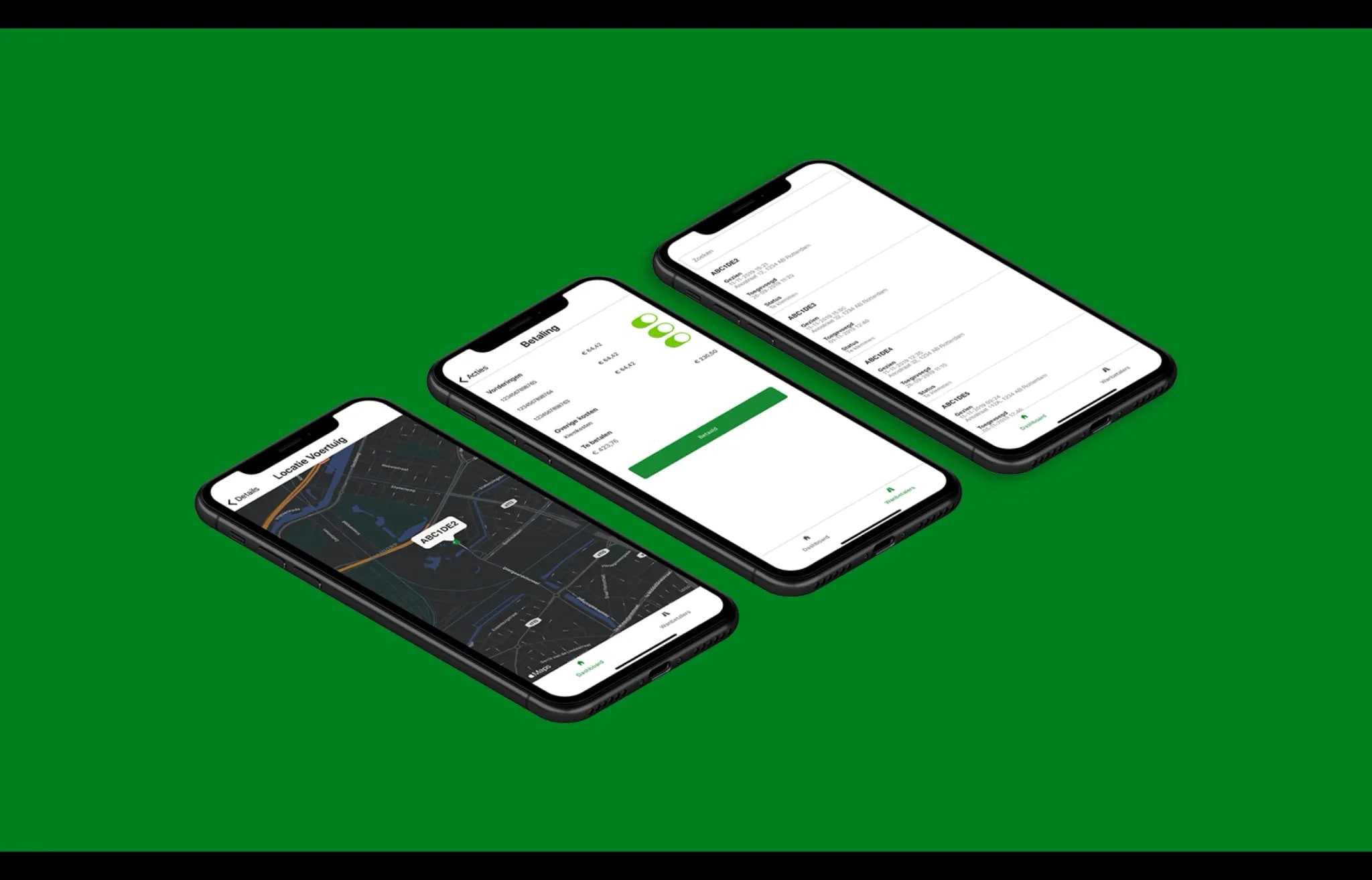
JAM-IT developed Klemmi, the first mobile native app ever built with Mendix. This application helps Rotterdam's enforcement officers gather and process information about wheel clamps. When the scan car finds a defaulter, Rotterdam's enforcement officers receive a push notification on their phone. When they open the app, they can see the vehicle's details, including the registration plate, the location and the status. The officer can then open their navigation and drive to the location.
Once a wheel clamp has been fitted, the officer can change the vehicle's status to 'clamped' and upload the accompanying photos. The vehicle owner can pay their outstanding fines in two ways: with the officer on the street or at the municipal counter. In both cases the officer can easily find the vehicle in the app, including its status and the outstanding amount.
After payment, the officer clicks 'save' and the status is automatically changed to 'unclamp'. Rotterdam's enforcement officers then receive a push notification to remove the wheel clamp. The tax authority is also automatically informed of the payment, so they can process it in their systems.
If no payment has been made after five days, the vehicle's status automatically changes to 'to be towed'. Rotterdam's enforcement officers get a push notification on their phone so they can tow the vehicle away. Because the app is mobile native, it works extremely fast and can also be used offline. The app synchronises with the server as soon as it has an internet connection again. That matters because vehicles can also be found in places the internet does not reach, such as tunnels and car parks.
The application works on iOS and Android, so officers on the street can use the app on their iPhones and officers at the municipal office can use it on their desktops.
The system is also less prone to errors, such as calculation mistakes or losing payments, documents or even a vehicle. All of that saves the municipality money. On top of that, the application makes it easier for officers to work together, process information and track down defaulters.
The app is not only more efficient, it also offers new ways of tracking down defaulters. Officers can now look up any registration plate in the app to see whether the vehicle has outstanding fines, which makes it possible to fit a wheel clamp on the spot. Because the app stores the vehicle's location, any movement of the vehicle (for example after unauthorised removal of the wheel clamp) is detected. The vehicle's status then changes to 'to be towed' and the extra costs for that are automatically added to the debt.
Because of privacy regulations, the app automatically deletes all data on 'innocent' registration plates and keeps only the data needed to find defaulters. The scan events themselves, however, are not linked to personal information, so those are stored in the database. These scan events are worth keeping, because they can indicate which locations are popular with defaulters. In future this information can be used to make the scan cars' routes more efficient.
 Want to know more?Ask Armando
Paint, coatings and printing ink are everywhere. From buildings and bridges to packaging and vehicles. Yet very few peop...
Plenty of business owners struggle with receipts that go missing or fade exactly when they are needed for the books. BON...
For municipalities, contractors and construction projects, efficient stock management of materials is a major challenge....